In conversation with Jolyon Connell – Head of Fraud & Asset Recovery
Insight
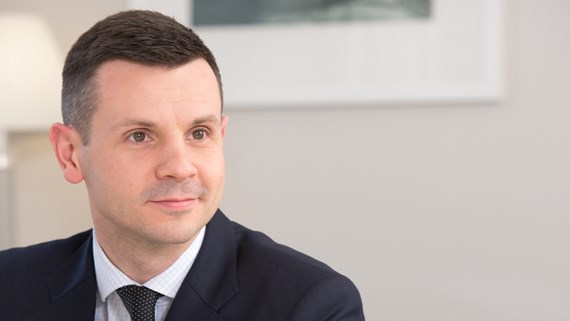
We speak to Jolyon Connell, Partner in Farrer & Co’s Dispute Resolution team, about fraud and asset recovery disputes, the qualities needed to do this work well, and the team’s recently published Fraud Toolkit.
How did you end up specialising in fraud and asset recovery?
Like many fraud lawyers, I found myself acquiring experience without having set out to specialise in it. Fraud work also sits naturally alongside my broader commercial litigation practice. As a junior lawyer, I found myself working on a few fraud cases and quickly realised they contained all the things I enjoyed most about disputes: complicated facts, interesting people, genuine urgency and the occasional sense that you are living through a seemingly implausible Netflix documentary.
I am still advising on significant fraud claims alongside my commercial litigation cases because fraud claims are rarely just legal exercises: they are a mixture of strategy, investigation and litigation, which keeps it really interesting.
What makes a good fraud lawyer?
Creativity, cynicism and calmness. Successful fraud and asset recovery cases often require creative solutions and lateral thinking, as well as an innate ability to sense that all is not what it seems (or, more often, is not what the other side is asserting adamantly to be the case). And calmness matters because clients usually come to us when something has already gone wrong.
The ability to remain measured and see the bigger picture while everyone else is (understandably) worried is often just as valuable as any piece of legal knowledge. A healthy appreciation for spreadsheets also helps more than most non-fraud lawyers might expect.
What do clients sometimes misunderstand about fraud cases?
Winning the argument and recovering the assets are two different skills. Winning a judgment against somebody who has thoughtfully moved assets around the world is a bit like proving who stole your car only to learn it is now spread across three continents and five different legal systems. Clients are also sometimes surprised by how much hinges on speed.
In fraud work, the early stages of the case matter enormously and leaving a suspected fraud unattended rarely improves its prospects of a successful outcome.
Where do you think fraud work is heading over the next few years?
Fraudsters have always been early adopters of technology, and I do not see that changing. We already advise clients on disputes involving crypto assets, digital payment systems, online investment schemes and increasingly sophisticated forms of deception. The technology evolves, but the underlying themes are remarkably consistent. I expect investigations to become even more international and multidisciplinary.
The future fraud lawyer will still need to understand the law, but they will need to adopt the approach we deploy at Farrer & Co to work closely with investigators, forensic accountants, technology experts and lawyers in multiple jurisdictions. More specifically, the future battleground looks likely to be AI-enabled fraud, which will add a whole new dimension to the persuasiveness of frauds: fraudsters can be extraordinarily innovative, and one cannot help occasionally wishing they had applied those talents to a lawful career.
What is it about fraud work that still surprises you, even after years of doing it?
People often assume that frauds are very sophisticated. While some are – and the instruments through which frauds are carried out can be fiendishly complex – I am always amazed at the simplicity of the modus operandi at the heart of many fraud claims that we advise on, even large and international claims.
What still surprises me is how many frauds succeed because they exploit very ordinary human instincts: trust, optimism, urgency or the desire to believe a convincing story.
The team has recently published its Fraud Toolkit. What should readers take from it?
Frauds are, sadly, an inescapable part of modern business life. When fraud does happen, panic is understandable – but hope is not a strategy and quickly developing a plan to respond is considerably more useful.
The English Court has a broad and helpful array of tools that can be used to try to recover situations for fraud victims – or to allow innocent parties to defend themselves against misplaced allegations of fraud. It will not stop you from becoming a victim of fraud, but using some of those tools can help to turn the tables in your favour.
This publication is a general summary of the law. It should not replace legal advice tailored to your specific circumstances.
© Farrer & Co LLP, July 2026