Is your neighbour crossing the line? A guide to boundary disputes
Insight

You may think you know the true position of your property’s boundaries. "They’re clearly edged in red on my title plan!", I hear you cry. But when that line is moved or questioned by a neighbour, a simple disagreement can escalate into a full-blown dispute faster than you can say "expert boundary surveyor”, and your trusty Land Registry title plan is unlikely to save you. This guide will help you understand how to get clarity on your property’s legal boundaries and the evidence needed to support your position when needed, to ensure that good neighbours can become, and indeed stay, good friends.
The 'determined boundary'
Your Land Registry title plan, while a useful reference, typically illustrates only the general position of your property lines – this is known as the 'general boundary rule.' It means the precise legal boundary of your property isn't definitively fixed by your title plan. For absolute certainty, particularly for high-value estates or complex land layouts, you can apply for a 'determined boundary'. This formal Land Registry process accurately fixes the boundary's exact location, rendering it legally binding and eliminating future ambiguity. It’s a strategic move for long-term clarity and enhanced security.
The procedure for obtaining a determined boundary
Obtaining a determined boundary involves a formal application to the Land Registry, typically supported by a detailed, scaled plan prepared by a chartered land surveyor. This plan must precisely define the boundary. Crucially, all adjoining landowners must be notified of the application and given the opportunity to object. If no objections are raised, or if any objections are resolved, the Land Registry will then officially record the determined boundary, which becomes legally binding on all parties.
Gathering the evidence
The key to resolving a boundary dispute is evidence. The relevant documents are those that build a compelling historic narrative of the position of the boundary. This isn't just about pointing to the current boundary features but setting out the history of the boundary itself.
The following categories of documents are key:
- Original deeds and plans: The foundation of your property's history lies in its earliest conveyances. These documents, though sometimes vague or referencing features long gone, reveal the initial intentions for the boundary.
- Historic Ordnance Survey (OS) maps: These maps offer a visual timeline, showing physical features and land use at different points in history. They can corroborate or challenge interpretations of older deeds, providing a spatial context to historical transactions.
- Aerial photography: Historic aerial photos provide compelling visual proof of past ground features like old hedgerows, walls, or even faint lines of previous occupation. They offer an independent perspective on how the land was actually demarcated over time.
- Expert boundary surveyors: These specialists can conduct detailed site inspections, take precise measurements, and analyse all available historical data. Their expert reports and scaled plans provide definitive professional opinion on the likely position of the legal boundary, serving as vital evidence in any application for a determined boundary.
Bringing this evidence together, often with expert boundary surveyors, is key to establishing the position of your legal boundary.
A cost-benefit reality check
It is common for a boundary dispute to become a battle of wills, fought on principle rather than practical value. However, even a dispute over a small strip of land can quickly accumulate legal costs far exceeding the land's worth. Beyond the financial outlay, consider the stress, time and irreparable damage to neighbourly relations that can be involved in a boundary dispute. Before committing to litigation, consider whether the potential is worth the investment of time and money. Exploring mediation or direct negotiation, even if challenging, is almost always a more sensible and cost-effective first step.
Proactively getting clarity on your boundaries, armed with some historical detective work and a pragmatic approach, is the best way to safeguard your investment.
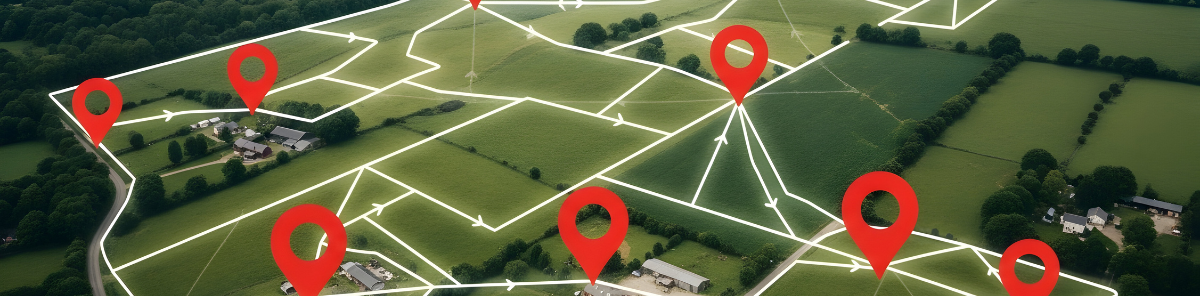
Neighbour and boundary issues: key legal considerations for landowners and developers
Neighbour-related property issues continue to present practical and legal challenges for landowners, developers and homeowners. Our Property Litigation team has produced a series of short articles examining some of the most common areas of dispute, the principles that govern them and the steps that can reduce risk.
This publication is a general summary of the law. It should not replace legal advice tailored to your specific circumstances.
© Farrer & Co LLP, November 2025