Shifting approaches to state immunity: what the Alhayali judgment means for future cases
Insight
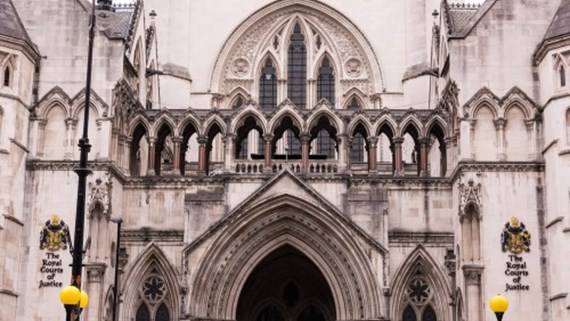
The Court of Appeal's decision in The Royal Embassy of Saudi Arabia (Cultural Bureau) v Ms A Alhayali [2025] EWCA Civ 1162 is a significant ruling for diplomatic missions in London.
Saudi Arabia's appeal was unsuccessful. It lost the case following an analysis of whether the claimant's role at the embassy was sufficiently governmental in nature as to attract immunity.
Significantly, in obiter comments Lord Justice Bean signalled the curtailment of the use of psychiatric injury as a basis for claims in the Employment Tribunal. Such claims were a recent and novel development in English law following the case of Federal Republic of Nigeria v Ogbonna [2012] 1 WLR 139 (EAT). The use of this exception to immunity in Employment claims was leading to a large number of claims against states proceeding in circumstances where the state would otherwise be immune.
These obiter comments of the Court of Appeal will likely stop many claims against states. For those who consider that the UK should remain consistent in its application of international law in its domestic courts, this ruling is a welcome development.
Parties in Employment Tribunal matters where an allegation of the state causing psychiatric injury has been made should immediately reevaluate what impact this decision has on their case.
Background
Ms Alhayali (the Claimant) was employed by the Saudi Arabian Embassy’s Cultural Bureau in London (the Embassy) from 2013 to 2018. She brought claims to the Employment Tribunal (ET) in 2018, alleging discrimination, harassment, and victimisation on grounds of gender, disability, and religion.
There were three key issues for the Court of Appeal to consider:
- the Embassy claimed state immunity under the State Immunity Act 1978 (SIA), arguing the ET had no jurisdiction. It relied upon s.4 SIA, stating that the Claimant's role was sufficiently governmental in nature as to attract immunity (applying Lord Sumption's test in Benkharbouche v Embassy of Sudan [2017] ICR 1327). The Claimant refuted this characterisation of her role (the First Issue);
- the Claimant further argued that, irrespective of the Embassy's immunity for the purposes of s.4 SIA, she should be able to bring a claim against the Embassy for psychiatric injury pursuant to s.5 SIA (relying upon a precedent set in Ogbonna) (the Second Issue); and
- the Claimant claimed that in any event the Embassy had previously waived its claim to State Immunity for the purposes of s.2(2) SIA through an email from its solicitors to the ET in April 2019. The Embassy argued that its solicitors did not have authority to waive its immunity, relying upon the approach taken in Republic of Yemen v Aziz [2005] ICR 1391 (the Third Issue).
Outcome
The Claimant was successful on the First Issue. The Court found that her role did not attract state immunity for the purposes of s.4 SIA.
Interestingly, the Court provided significant (albeit strictly obiter) comments in relation to the remaining two issues:
- on the Second Issue, being the interaction between s.4, s.5 and s.16 SIA, the Court was highly sceptical of the decision in Ogbonna. This is a significant development, and one which we welcome; and
- on the Third Issue of a state refuting waiver of immunity by reference to lack of authority, the Court was critical of the reasoning in Aziz. Again, a notable development.
Reasoning and comments
The First Issue: the nature of the Claimant's role
S.4 SIA creates an exception to state immunity for employment-related claims. It allows individuals to bring an employment claim against a foreign state if (1) the contract of employment was made in the UK, or (2) the work is to be wholly or partly performed in the UK.
There are then a range of 'exceptions to this exception', a notable example seen in s.16 SIA.
S.16 SIA provides that a member of a mission or consular post who is not a diplomatic agent/ consular officer cannot bring an s.4 SIA claim if (1) their employment contract was entered into in the exercise of sovereign authority, or (2) the conduct complained of was done in the exercise of sovereign authority.
One of the key questions for the Court was whether the Claimant's role met the test of s.16 SIA (and therefore, whether immunity applies). The leading authority is Lord Sumption's judgment in Benkharbouche.
Applying Benkharbouche, the Court held that the Claimant's duties (being clerical, administrative and supportive) were not sufficiently close to the exercise of sovereign authority. Her work involved arranging student events and forwarding requests, not making decisions.
In conducting their analysis, the Court of Appeal emphasised that the nature of the employee’s actual duties is critical, not just the diplomatic mission’s overall purpose This is a helpful clarification of Lord Sumption's reasoning.
The Second Issue: a second bite of the cherry? Bringing an s.5 SIA claim in the context of s.4 SIA immunity
The Claimant suggested that even if the Embassy was immune under the s.4 SIA regime for employment cases, she would still be able to bring an s.5 SIA claim for personal injury in relation to the same facts, in doing so essentially having a second bite of the cherry and bypassing the protections afforded to the Embassy by s.4 SIA. She relied upon authority set by Ogbonna.
The Court were critical of Ogbonna, and stated that it was wrong on this point. Lord Justice Bean summarised the difficulty at [33]:
"It would be very peculiar if an employee of an embassy, perhaps a very senior diplomatic agent, could be precluded from bringing any employment claim by virtue of ss 4 and 16, including a claim for compensation for discrimination, with the exception that if the discrimination caused psychiatric injury that element of the claim could not be defeated by state immunity. That would drive a coach and horses through the careful scheme of exceptions created under ss 4 and 16."
This is a welcome change in direction. The decision in Ogbonna had eroded a key protection afforded to states, and in doing so prevented the UK from meeting its public international law obligations.
In the process of this reasoning, the Court of Appeal acknowledged [32] that psychiatric injury can fall under the personal injury exception in s.5 SIA, in doing so referencing reasoning in Shehabi v Kingdom of Bahrain [2025] 2 WLR 467. The UK's practice in this area remains at odds with the global application of immunities.
The appeal in Shehabi is being heard by the UK Supreme Court later this year, and we understand that the application of s.5 SIA to instances of psychiatric injury is due to be specifically addressed at that hearing.
The Third Issue: waiver of immunity by instructed solicitors
Although the Embassy had initially accepted jurisdiction in 2019, it later tried to retract this. It did so by stating that the solicitors did not have authority to waive immunity, relying on Aziz (in which the Court had allowed such a retraction, noting that a solicitor can only waive immunity on behalf of a state if directly or indirectly instructed to do by the head of mission).
The Court expressed concern about the precedent in Aziz, but did not resolve the issue definitively. At [46] Lord Justice Bean noted that:
"It is worrying to think that a claimant could be led on for years and incur substantial costs in litigation, only to be told that solicitors who had apparently submitted to the jurisdiction on behalf of a respondent state had no authority to do so. But that is a matter for another case and another day."
The issue of waiver in Alhayali was not determinative, because in any event the Court was found to have jurisdiction through the application of s.4 SIA. However, the obiter comments of the Court on this point demonstrates that the position reached in Aziz is not set in stone.
Comment
From our perspective, the obiter comments in Alhayali are of far greater interest than the substantive decision. We expect that the Court's position on Ogbonna will be highly persuasive, with the practical impact being a reduction in avenues available for claimant to weaponise s.5 SIA claims against states.
We have previously written on concerning trends in state immunity, with an erosion of protections increasingly alienating diplomatic missions to the UK and distancing the UK from its obligations under public international law. In such a context, the approach taken in Alhayali is refreshing. It remains to be seen whether the UK Supreme Court in Shehabi will take a similar approach and put English jurisprudence back on course with international orthodoxy.
Jehad Mustafa, Partner and Head of Sovereign Advisory at Farrer & Co, has previously been asked to comment on the decision in Alhayali. The Law.com piece in which he has been quoted can be read here.
This publication is a general summary of the law. It should not replace legal advice tailored to your specific circumstances.
© Farrer & Co LLP, September 2025