A dam nuisance? Landowners' liability for flood damage
Insight
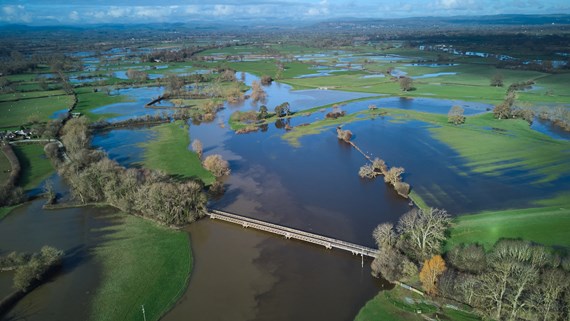
Whilst natural events like heavy rainfall are unavoidable (especially at this time of year), landowners can still owe a duty of care to their neighbours for flood damage. This article explores landowners' responsibilities and how they can protect their position.
Naturally occurring flooding
The landmark case of Rylands v Fletcher established that landowners are responsible for harm arising from things that they bring onto their land, which then escape and cause damage – that is to say, 'non-natural uses' of land. The example in that case was a reservoir which was improperly constructed and caused neighbouring property to flood. The later case of Leakey v National Trust, however, confirmed that landowners may also bear responsibility for damage caused by hazards occurring naturally on their land – such as where heavy rainfall causes a river to overflow. In Leakey, although the landslip which damaged the claimant's property was caused by purely natural processes (the underlying instability of the land), because the defendant was aware of the danger – and had been specifically warned about it by Leakey – but had not done anything about it, the defendant was in breach of their duty of care.
Where you have a potential natural hazard on your land, such as a river or unstable land, what should the landowner do? Inevitably, the answer will depend on the circumstances, but it is worth noting that Leakey established that a court should consider not just what a landowner does, but also what can reasonably be expected of them, having regard to both their financial means and physical capabilities. Clearly this resulted in a relatively high threshold for the National Trust, with its attendant expertise and resources, but less would have been expected of a private individual.
This point was illustrated by the case of Green v Lord Somerleyton and others. Green owned marshland used for grazing cattle, and the defendants owned neighbouring marshland, which adjoined a lake owned by a third party. Overflow water from the lake was diverted by a watercourse via Green's land, to a nearby river, but the watercourse became obstructed and this, combined with heavy rainfall, caused Green's land to flood. The court held that in this case the defendants had discharged their duty: Green had not made it clear to the defendants what he expected them to do to prevent the flooding, had done nothing personally to reduce the risk, and had not cleared the lower part of the watercourse for which he was responsible. Further, the court considered it would have been disproportionate to expect the defendants to clear their part of the watercourse, relative to the damage likely to be caused if neighbouring land was flooded. However, the case underlined the fact that there is a duty of care to do what is reasonable in all the circumstances.
Artificial structures and flooding
Where a landowner creates an artificial structure on their land, such as a culvert, which interferes with the natural flow of water, they must ensure their actions do not increase the risk of flooding to neighbouring land. Following Leakey, they may also be under a duty to improve or update the structure to keep it clear of debris and to ensure that it remains fit for purpose.
In Bybrook Barn Centre Ltd v Kent County Council, a landowner successfully claimed against the Council when its property (a garden centre) was damaged by flooding caused by a stream bursting its banks due to exceptionally heavy rainfall. Although the rainfall was natural, the flooding would not have occurred if the Council's culvert had been bigger: the Council knew the culvert was inadequate (it had flooded before) and had the means to prevent flooding by enlarging it.
Although situations will always be fact-specific, it is common sense for landowners to keep natural watercourses clear of debris and excessive silt. Where land is known to flood, consider whether it would be practical to install flood defences to prevent damage to neighbouring land. The condition and capacity of artificial structures such as culverts and drains should also be kept under a watchful eye.
This publication is a general summary of the law. It should not replace legal advice tailored to your specific circumstances.
© Farrer & Co LLP, October 2025