Tax traps of buying a country house through a company
Insight
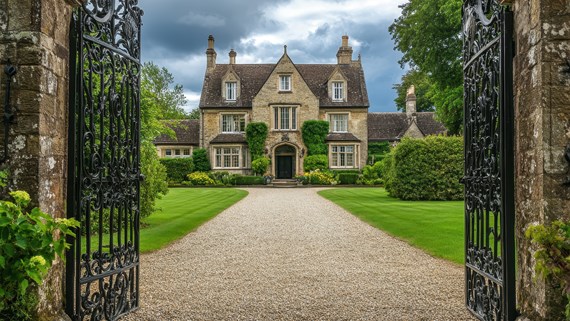
Buying a country house or estate through a company can be attractive for various succession planning, privacy and liability protection reasons. It is not immediately obvious who owns the property and any claims would be made against the company, rather than against individuals in their personal capacity.
The starting assumption for many purchasers is that the tax position will be similarly advantageous; after all, company ownership appears to offer lower corporation tax rates (relative to individual tax rates) and access to commercial tax reliefs. However, this is not always the case, particularly when the residential element comprises a significant proportion of the overall value.
Consider the example of Mr and Mrs Smith, a non-UK-resident couple purchasing Brackenwood Hall, an estate comprising Brackenwood Manor, 50 acres of agricultural land and a dairy farm. They intend to use Brackenwood Manor as their main home while continuing the farming operations. Concerned about privacy and succession planning, they decide to buy through Brackenwood Limited, a newly incorporated UK company. Let’s see why this could turn into a costly mistake.
Reason 1: Stamp Duty Land Tax (SDLT)
Brackenwood Limited acquires Brackenwood Hall for £2.5m. Having read articles such as SDLT and rural property – where did it all go wrong, the Smiths assume SDLT would be calculated at lower non-residential (mixed-use) rates of up to 5% because the estate includes commercially operated agricultural land. This would give rise to a total SDLT liability of £114,500.
In fact, SDLT is due on the £1.5m of the total price which is attributable to the residential element, Brackenwood Manor, at a punitive flat rate of tax of 17% for UK resident purchasers and 19% for non-residents. And even though Brackenwood Limited is a UK company, because it is owned by the Smiths (non-UK-resident individuals), that £1.5m is taxed at 19%. Only the remaining £1m attributable to the agricultural land is taxed at the lower non-residential rates. The total SDLT payable is therefore £324,500. Had the Smiths purchased the property personally, SDLT would have been £114,500 – a difference of £210,000.
Reason 2: lack of privacy protections
The Smiths are public figures and would prefer to keep the ownership of Brackenwood Hall private. Historically, purchasing through a company could obscure property ownership and provide this privacy. Today, transparency measures – such as the obligation for UK companies to maintain a register of Persons with Significant Control (PSC) at Companies House – means that certain ownership information is publicly available. Anyone who owns or controls more than 25% of the shares or voting rights in a company, or who otherwise has a right to exercise significant influence, must be included on the PSC register. UK companies must also maintain a register of directors at Companies House, so even if the Smiths do not have sufficient ownership or control rights to satisfy the PSC criteria, their names may still be associated with the company if they are directors of it. These obligations often eliminate any privacy benefit that might otherwise be possible by buying land through a company.
Reason 3: ongoing annual tax charges
The Annual Tax on Enveloped Dwellings (ATED) applies to companies that own UK residential property worth more than £500,000. Reliefs are only available where the property is genuinely used for commercial purposes.
Brackenwood Limited falls within the ATED regime because Brackenwood Manor is worth £1.5m and will be the Smiths’ home. The yearly ATED charge is therefore £9,450 for the 2026-2027 tax year. As rates of ATED rise each year, and properties must be revalued regularly, ATED would become a significant and escalating long-term cost for Brackenwood Limited. Had the Smiths purchased personally, there would be no such recurring tax expense.
Reason 4: employment tax risks
The Smiths are directors of Brackenwood Limited and therefore employees for tax purposes. As such, their use of Brackenwood Manor as personal accommodation is taxable as a benefit in kind and they will have to pay income tax on the value of that benefit. This means that the Smiths could each need to pay income tax each year based on the value of the benefit (which could be significant), plus Class 1A National Insurance Contributions (NICs) of 15% for Brackenwood Limited. These liabilities would not have arisen had the Smiths purchased in their own names.
Reason 5: lack of tax reliefs on sale
Imagine that, after eight years of ownership, the Smiths decide to sell Brackenwood Manor for £2m, making a gain of £500,000. As the property was owned by Brackenwood Limited, this gain would be subject to corporation tax of up to £125,000 (at current rates) and, if it subsequently distributes the remaining proceeds as a dividend, a further dividend tax (at a current top rate of 39.35%) may also be payable by the Smiths.
The total tax liability on selling Brackenwood Manor would therefore be over £270,000. This could potentially have been avoided if Brackenwood Manor had been owned by the Smiths personally, as principal private residence relief from capital gains tax (CGT) may have eliminated any tax otherwise due on sale.
If the Smiths have the foresight to obtain tax advice on a proposed sale of Brackenwood Hall, they might opt to sell Brackenwood Limited instead of the property itself. Selling shares rather than property can qualify for lower CGT rates compared to extracting funds from a company as a dividend after a property sale. For the buyer, purchasing shares also means that stamp duty on shares is due (rather than SDLT) which, at a rate of 0.5%, is a significant saving. That said, this route comes with drawbacks: the buyer will inherit all historical liabilities of the company, including potential tax exposures and both parties face significant additional professional costs for due diligence, legal structuring, and warranties.
Reason 6: lack of inheritance tax (IHT) protection
When the Smiths prepared their wills, they assumed corporate ownership of the Manor and business would simplify their IHT position and allow them to claim Agricultural Property Relief (APR) or Business Property Relief (BPR).
In practice, the structure offers no material IHT advantages and, while it may be possible to adjust it to plan around any IHT concerns, this will depend entirely on the Smiths’ personal circumstances. It will also add complexity and cost to their estate planning.
Reason 7: difficulties with Value Added Tax (VAT) recovery
The Smiths initially believed that acquiring the estate through a company would allow them to recover all VAT associated with their acquisition and ongoing management of the property. However, VAT recovery is not determined by whether Brackenwood Hall is owned through a company, but rather by whether taxable business supplies are being made by it. While it is possible that the company might recover some VAT on costs related to the commercial activities of the dairy farm, this would not apply to the residential and personal elements of the estate, which would remain outside the scope of VAT. In practice, purchasing the estate via a company does not therefore confer any VAT advantage for the Smiths.
Personal ownership usually wins
Historically, corporate ownership of a country house or estate offered significant advantages. Legislation introduced by successive UK governments has not only removed many of these benefits, but now often actively penalises holding such properties in corporate structures. As the Smiths have belatedly discovered, corporate ownership in their case will result in higher taxes and greater compliance burdens.
The good news is that there are potential solutions to many of these problems depending on each buyer’s circumstances and personal goals. Segregating personal and commercial elements, or using trust arrangements or other bespoke planning strategies, for example, can all improve the tax position.
This article is part of our Rural Estates Newsletter 2026, click here to read the full edition.
This publication is a general summary of the law. It should not replace legal advice tailored to your specific circumstances.
© Farrer & Co LLP, February 2026