Advice on fixtures and fittings when purchasing a country house with a shepherd’s hut
Insight
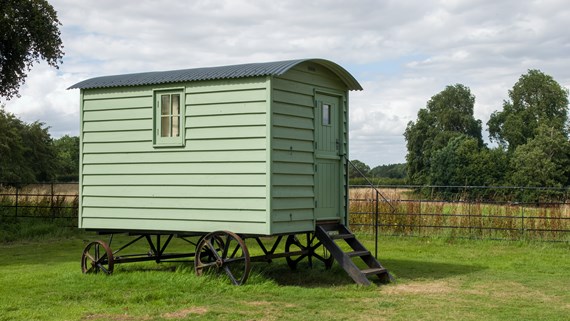
Each month, the Farrer & Co Residential Property partners give us a brief insight into their working lives. This month, we provide an overview of fixtures and fittings advice given to clients when a shepherd’s hut, included in the sales particulars, was later excluded from the property they were purchasing.
The Brief
We were recently instructed by a couple relocating from Fulham to the country. They had just had an offer accepted on a beautiful Grade II listed country house in Oxfordshire with extensive gardens and outbuildings. Our clients were working with an excellent local buying agent who introduced the couple to us, given our proven track record in advising on listed country houses.
Executing the Brief
Included in the sales particulars was a charming shepherd’s hut, nestled in a quiet corner of the grounds and only accessible through a narrow opening at the end of a walled garden abutting the main house. However, the Fittings and Contents Form (the standard Law Society form, which indicates which contents are included and excluded) provided with the sales pack, unexpectedly marked the shepherd’s hut as excluded from the sale.
This prompted a discussion between the parties as to whether the hut was a fixture (and therefore deemed part of the property) or a fitting or chattel (and therefore removable). The seller argued that, because the hut was on wheels, it was a fitting and not included in the sale by default. This was frustrating for our clients as there had been no suggestion prior to this point that the hut (which was being used as a functioning office space) would be excluded from the sale – they thought it was included in the agreed purchase price.
Given the hut was connected to mains electricity and water, and had been bolted to a platform concreted into the ground, we knew there was a good counterargument to run. We immediately reached out to the seller’s lawyers, who we know well, to facilitate a sensible conversation on the hut as soon as possible. In the context of the wider transaction, this was a minor commercial point, and we knew it was important that the parties didn’t lose sight of this. In our experience, arguments over contents can be very damaging to the relationship between the buyer and the seller and we have seen deals collapse as a result of these arguments.
The seller’s lawyers took the point away and the following day the seller proposed that the hut could remain – for an additional £20,000. Our clients of course did not want to pay any more but they had fallen in love with the house. They were concerned that, were the seller to remove the hut, its awkward position might cause significant damage to the listed building and surrounding stone walls (which they wished to avoid, even if the seller committed to remedying any damage).
We discussed the offer and options available with our clients. The seller confirmed he did not intend to dismantle the hut to remove it, which heightened our clients’ concerns about the risk of structural or aesthetic damage. Although our clients had no emotional attachment to the hut, they were keen to avoid unnecessary disruption and took a pragmatic view. After a series of discussions – and some careful negotiation – the parties agreed that the hut would remain in situ and be included in the sale, with our clients paying £7,000 for it.
Our client was happy with this result and the contract was updated to reflect the agreed position and exchange followed two weeks later.
The debrief
Our clients completed on the purchase at the start of this month, the day after their children broke up from school, and they are thrilled to be enjoying a glorious summer settling into their new home in the Oxfordshire countryside.
Our Country House Services brochure provides an overview of our expertise in this area and Camilla Tunnicliffe, the Knowledge Lawyer in the Residential Property team, has prepared an article on determining whether an item is a fixture or a fitting.
We are always happy to discuss the conveyancing process and how to manage a transaction.
This publication is a general summary of the law. It should not replace legal advice tailored to your specific circumstances.
© Farrer & Co LLP, July 2025