Landowners’ duty of care: managing risks relating to neighbouring land
Insight
Landowners owe a duty of care to anyone who comes onto their land – whether authorised visitors under the Occupiers’ Liability Act 1957 or trespassers under the more limited duties of the 1984 Act. Employees, contractors and volunteers are generally covered separately by the Health and Safety at Work Act 1974.
That said, intrepid hikers may be quick to remind you that potential liability does not stop at the boundary fence (or crumbling wall). Landowners can still be responsible for risks that extend beyond their own land – a key issue for those managing large estates, particularly where they adjoin roads, footpaths or areas regularly used by the public.
Risks and responsibilities
Common hazards which may affect those on neighbouring property include:
Falling branches or trees
This is a particularly common problem given that boundary lines are often marked by mature trees.
In Witley Parish Council v Cavanagh [2018] a tree leaning over a road caused serious injury to a passing bus driver. The tree had structural decay, which (it was held) could have been found if the Parish Council inspected the trees along their boundary more regularly (and applied zoning when determining the appropriate level of risk assessment).
By contrast, in Parker v National Trust [2021], the High Court ruled that the Trust was not liable for injuries caused by a falling branch. In this case it was held that the Trust had a robust tree inspection regime aligned with industry standards.
The two contrasting outcomes of these cases highlight the importance of zoning, inspection frequency, and adherence to guidance in this area.
Livestock dangers
In a tragic incident in 2020, a teacher was fatally crushed by cows while running with a dog along a public right of way which cut through a field. The landowners were prosecuted for failing to provide adequate warning signage or signage towards an alternative route. See also Will Johnson’s article which examines the issues arising from damage caused by escaped livestock.
Flooding and boundary hazards
Estate features such as ditches, culverts, or deteriorating walls can pose risks to neighbouring properties. As a dog lover, I was surprised to hear about numerous cases in which collapsing boundary walls have caused injury to people and, in some instances, killed dogs. In such cases, courts will consider the available evidence – often relying heavily on surveyors' reports, which may be hampered by being commissioned only after the collapse. To succeed in a claim for damages following a wall collapse, a claimant must demonstrate that the wall fell because it was not adequately maintained, or that there was a latent defect which the landowner or occupier ought reasonably to have known about.
HSE guidance and best practice
While not directly applicable here, the guidance issued by the Health and Safety Executive (HSE) provides a sensible starting point. It requires landowners (or those responsible for the land) to:
- identify hazards on and around their land, especially near public access routes;
- coordinate with forestry or site managers to ensure safe operations; and
- implement control measures such as signage, fencing, and route diversions during hazardous activities.
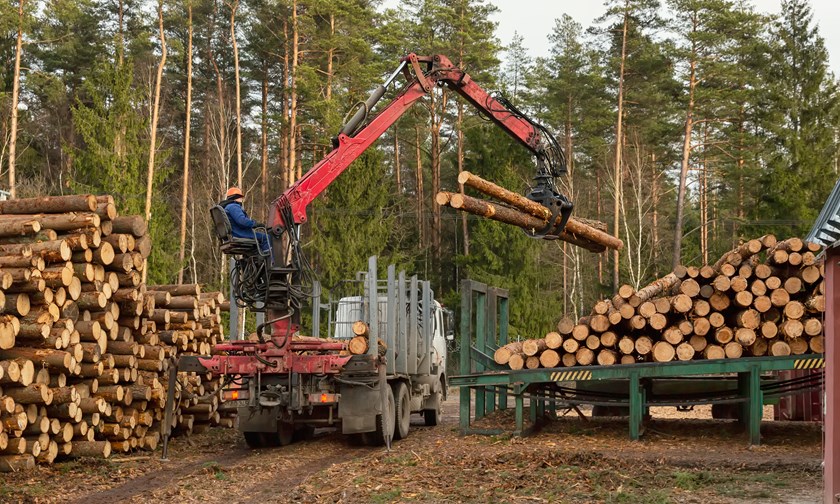
For estates with forestry operations, the HSE recommends proactive planning and communication with site safety coordinators. Warning signs, temporary closures, and public notices are essential when work poses risks to passers-by.
Practical steps for estate managers
To mitigate liability, estate managers should:
- Conduct regular risk assessments: especially after storms or seasonal changes,
- Maintain inspection records: particularly for trees, watercourses, and boundary structures,
- Install and maintain signage: ensuring it is visible, informative, and compliant with regulations,
- Engage qualified professionals: such as arborists or structural engineers, where appropriate, and
- Review insurance coverage: to ensure it reflects the scope of public and neighbour risks.
Conclusion
The law does not expect perfection, but it does require reasonable foresight and action. What matters is not simply having policies filed away in a dusty ring binder on a far-flung office shelf, but ensuring they are implemented in practice. Equally important is a clear understanding of the estate’s boundaries – which should be walked and checked regularly to minimise risks to neighbours and the public.
By understanding their legal duties and putting practical safeguards in place, landowners and estate managers can protect not only their neighbours and the public, but also the reputation and longevity of the estates they manage.
Neighbour and boundary issues: key legal considerations for landowners and developers
Neighbour-related property issues continue to present practical and legal challenges for landowners, developers and homeowners. Our Property Litigation team has produced a series of short articles examining some of the most common areas of dispute, the principles that govern them and the steps that can reduce risk.
This publication is a general summary of the law. It should not replace legal advice tailored to your specific circumstances.
© Farrer & Co LLP, November 2025